
Mariana Mora
UNAM Criminalizes a Student Victim of a Paramilitary Attack in Its Facilities
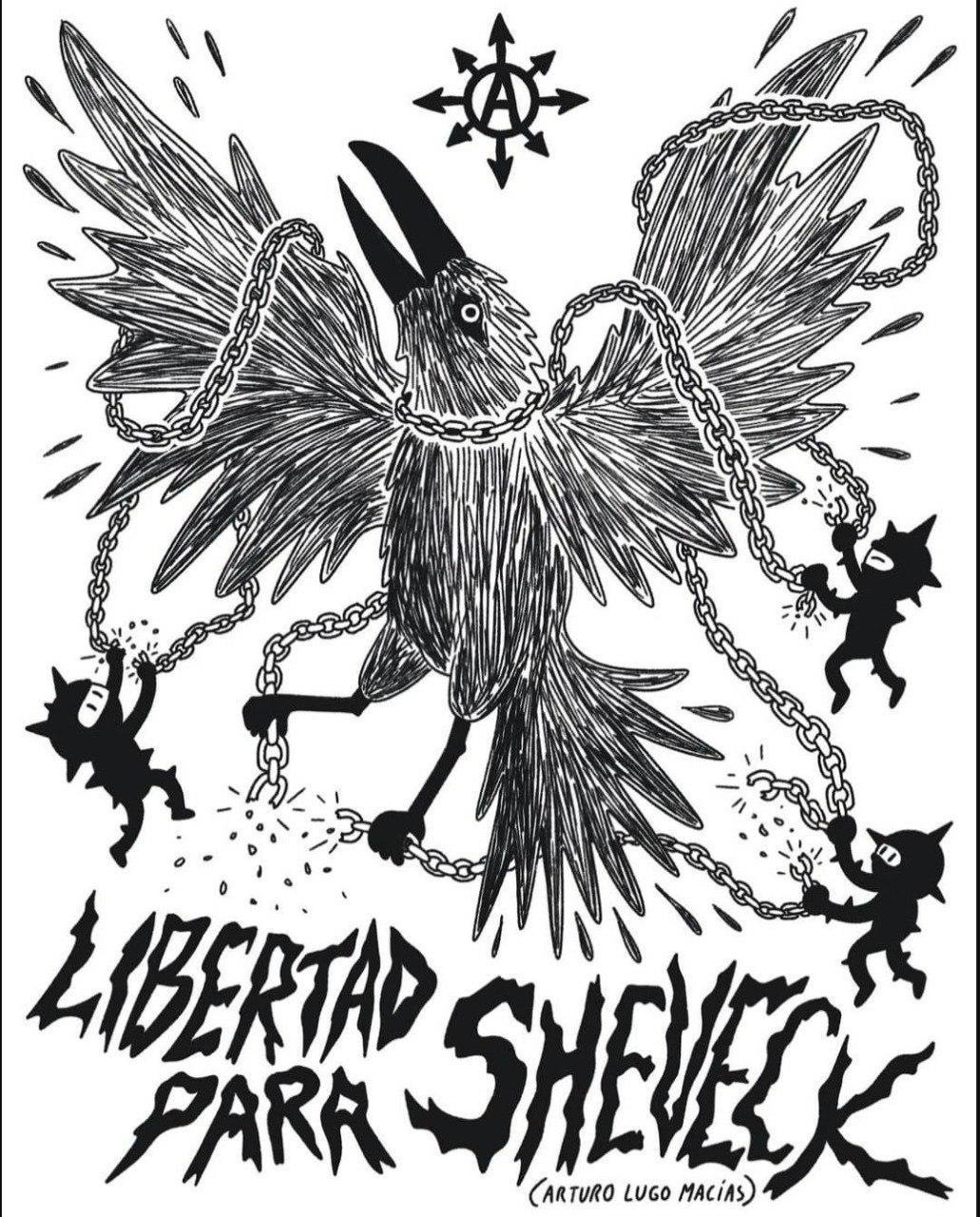
The Student Protest the University Ignored
The Night of the Paramilitary Attack
UNAM: A History of Institutional Violence, Repression and Criminalization
What Does UNAM Seek With the Criminalization of Its Students?
14 January 2026
At around 8 in the morning this past Thursday, Sheveck, as they're called by their friends, was detained and taken to the headquarters of the General District Attorney's Office of Guadalajara, where their friends quickly gathered demanding their freedom.
One of their friends managed to get in to figure out what charges they were accused of and remembers they told her that, "they wanted to close the case but UNAM insisted on them." They also told her that it had been difficult to capture Arturo, but that "with new technology, they manged to do it."
A few hours later, they were transferred to the headquarters is Naucalpan, Mexico state. There they had their first audience and that same day they took them to Almoloya, a preventive prison.
"When they arrived to Santiaguito —the Center of Prevention and Social Reinsertion in Almoloya de Juárez— a member of the police asked them if he was a capo, or why were they transferred so quickly", says one of the comrades that managed to speak with Arturo who asked to remain anonymous to avoid retaliation. "Because normally the people who are transferred on the same day are capos or narcos or something that requires speed", the police told Shevek.
The Student Protest the University Ignored
The events that the Autonomous National University of Mexico (UNAM) accuses Shevek of happened in the morning of 5 April 2020, but has its origins in the months prior in the bubbling student and feminist movement that denounced cases of harassment and gender violence in FES Acatlán, where they were a student.
"We made poster signs, organized talks and met together, things as simple as talking in the garden about the teachers who harassed us", says "Lorena", one of the survivors of the 5 April attack, whose name has been changed due to security concerns.
She was part of the Arguenderas y Revoltosas collective who, at the time, demanded that the Department come up with security protocols and concrete actions to guarantee a safe space for the students, including consequences to the perpetrators of sexual violence.
"Lorena" remembers that when they made canvasses of accusations and other protest actions, the Gender Commission Department would come to interrupt them and tell that if they wanted to make a report they had to do it directly to them,
"And the compañeras who did so received no support, they opened a folder and it was left at that. They said, 'it's all we can do at the moment because you have no proof or because you don't want to name others who have suffered through this.' They made a big deal about asking for the names of those who had been accosted by the teachers."
Faced with the disgust with the institutional revictimization, on 10 March 2020, "Lorena" and her comrades in struggle occupied a space in the faculty's Building 6, which had been occupied in 2014 in protest of the forced disappearing of the Ayotzinapa students. "It was necessary to retake a space for ourselves and be able to gather in a more horizontal manner, not as rigid as the institution or the Gender Commission", tells "Lorena".
They had various plans in mind for the space: a community kitchen, a daycare for comrades with children, a theater or self-managed library. But a few days later the pandemic started due to COVID-19 and they were left alone in the university's facilities. Later, a couple of comrades joined the squat from a student anarchist collective in the same department known as Kubo 906. Among them was Arturo Lugo, Shevek.
The Night of the Paramilitary Attack
A few days passed with relative calm. Then the electricity and water were cut off, but there were no other indications that the university would intervene in the squat. "I believed that, at most, other students or porriles would beat us. We weren't expecting a tactical team", says "Lorena" about the 5 April attack. She, along with her comrades, had already been attacked previously by students and the so-called "porros": shock groups that sabotage and repress student movements, assumed to be financed by university authorities or other actors interested in ending the protests. But this was different. Around 3 in the morning on 5 April 2020, a group between six and ten masked men erupted into the department with bullet-proof vests, arms, pipes, sticks, a pick, and gallons of gasoline. According to the testimony of "Lorena" and other survivors, "the paramilitary group headed to the building, towards Kubo 906, where they beat, humiliated, and tortured two students." One of them was beaten until they lost consciousness and had their jaw broken. The other was tied up and physically and sexually assaulted. Later they headed to the building where "Lorena" and the rest of the students were at. She remembers that Shevek was the first to hear what was happening and tried to prevent the attackers to enter the workspace. Then, the paramilitary group set the door on fire, managed to enter and brutally beat anyone they found inside, especially Shevek. In the Rapporteurship of the events, they mention that "the attackers said things like 'this is why you're raped and killed, for being vergueras' and 'this is a message from Erasmo', alluding to Erasmo González Castro, the then-Watch Commander of the FES Acatlán, with a history of aggression and repression of students." They also report that many comrades were sexually assaulted.
"Lorena" remembers seeing how they were attacking her comrades when one of the masked men beat her face and took her cellphone. Then, another of the men let off two gunshots into the sky, "and they gathered together and left marching through the same way they came in", she ends her tale. Six years later, she is still trembles at the sound of boots on cobblestone and their way of moving as a bloc.
When the ambulance arrived, the medics assessed Arturo's state as grave, that he had third degree burns, and his comrade was unconscious with a broken jaw.
On leaving, the students pointed out that in the faculty parking lot, there were about six patrol cars of the state police and Erasmo González stepped out of one of them, the Watch Commander their attackers had named.
UNAM: A History of Institutional Violence, Repression and Criminalization
The day after the attack, the National Commission of Human Rights (CNDH) requested UNAM to take precautionary measures for the violent acts that happened over the weekend.
This wasn't the first time that CNDH questioned the country's most important school for violating the rights of its students. In fact, three days prior to the FES Acatlán attack, they had announced themselves for "alleged acts of discrimination and violence against the female students of the Department of Political and Social Science, by UNAM authorities."
CNDH had, on 18 March that same year, received a collective report of students that reproached the authorities of various school staff for "not attending to their demands, despite pointing that they are absolutely legitimate, since they seek to halt gender violence that has been deployed against them."
In 2013, CNDH sent their first recommendation to UNAM precisely because of the sexual violence done by a professor to a minor. Four years later, Lesvy Berlín Rivera Osorio was murdered in the university's facilities by her partner, a worker at the institution.
Even with these antecedents, the reports of harassment and gender violence are systemically ignored at the University, and when the students protest in response, they are repressed. Some months before the attack "Lorena" and her comrades live through, a group of the students of the Rights Department tried to take the buildings to denounce the harassment and gender violence they lived through, but the university security repressed the march with beatings and shoves.
But, on top of the repression in part by the university security and police at protests, the porriles are instrumental to disarm student movements without it being clear who was responsible. And, although UNAM has historically denied their relation to these groups, the murder of a Cruz Azul fan on October 2025 at the hands of a security official of the learning center unleashed reports of porros within the institution.
On the other hand, the University has used the criminalization of protests before to stop students and their movements. One of the most severe cases is that of Jorge Esquivel Muños, who was illegally detained at the Philosophy Department in 2016 while he was in a politico-cultural event in favor of the liberation of political prisoners.
After multiple threats, an intense campaign of stigmatization wielded against him, and a long legal process, "Yorch", as his friends know him, died in prison on 9 December 2025 due to health complication stemming from the violence and medical neglects he lived through in the prison system.
What Does UNAM Seek With the Criminalization of Its Students?
The day after the paramilitary attack, FES Acatlán published a communiqué denouncing the violence created by the "group of masked men" that illegally entered the facilities; but didn't mention the violence done to the students that night. They also immediately sent two criminal accusations for the fire started that morning, but these were aimed against the students found there and not against he perpetrators.
ZonaDocs contacted the UNAM's press office to find out why weren't the people who broke in and beat the students not investigates, but at time of publishing they have not given a response.
In 2020, two students were detained, but they were not able to reach an agreement with the University to drop the charges. Throughout all this time, neither the case was dropped not did the authorities investigate further into those responsible for the attack; on the contrary, these last six years the District Attorney's office has been looking for Sheveck.
The police that detained them told their comrades at the head office in Guadalajara that "it had been difficult catching them, but thanks to new technology they had managed." This accounts the effort they display in criminalize students, as opposed to their institutional inability to find disappeared people, to name one example.
"UNAM invests a lot of money to persecute students who organize and not to persecute those who truly committed the crimes," holds one Arturo's comrades in an interview, "This is not a case of property damage, it is a political."
"Lorena" agrees with this. "For me, this wasn't so much about our being female organizers, but to send a message to students who organize." In her case, the repression left serious consequences, not just to her mental health, but she hasn't been able to finish her studies due to the fear she gets of going back to the faculty.
However, she also recognizes that the attack did not take away her rebelliousness and want to denounce the injustice they lived through. The demands of the survivors and their comrades are clear:
"It seems to us that the education institution should be held responsible for the events committed at the hands of a paramilitary group, identify the minds behind the events, and drop the legal cases against Arturo, as a series of congruent measures of an institution that boasts of caring for its student body."