Alexander Dunlap
Total extractivism
Welcome to the open cabal of ‘more is more’ & ‘all energy’
2026
Abstract
Revisiting extractivism definitions, this article affirms the concept of total extractivism. The implicit, and embedded reality, of total extractivism is animated by attending the 2025 Wyoming Energy Authority’s (WEA) Next Frontier Energy Summit. Drawing parallels with the film They Live, the article identifies an explicit and implicit total extractivism discourse permeating the summit. Revealing an institutionalized trajectory towards facilitating total extractivism, the article, in agreement with extractvism/postdevelopment criticisms, concludes that total liberation theory, practices and pathways deserve development and practical affirmations.
Introduction
In the Opening Plenary: Roundtable Discussion of the Global Extractivisms and Alternatives symposium (EXALT, 2020), the issue of defining extractivism was brought to the foreground. One of the roundtable participants, Eduardo Gudynas, accredited for coining or, at the least, popularizing (neo)extractivism (Gudynas, 2009), raised concern over the term’s expansive definitions. While recognizing that in practice ‘extractivism is closer to a political religion’ (EXALT, 2020, 41:30), Gudynas (2021, pp. 3–4) insisted, during the roundtable session and in a relativley recent book, that by branding ‘any use or abuse of Nature as ultimately extractivism’ will lose ‘rigour and precision’. When everything becomes extractivism, this ‘ambiguity’, he contends, first, lends itself to companies to discredit land defenders and advance their interest and, secondly, ‘it becomes very difficult to think of any alternatives’ (Gudynas, 2021, p. 4). Max Ajl (2023), despite ardent political differences with Gudynas (2019, 2021), shares a similar concern and raises valid challenges to extractivism/postdevelopment theory. Calling everything ‘extractivism’, for Ajl (2023), ignores the economic, political and developmental gains made by Zimbabwe, China and the ‘Pink Tide’ governments in Latin America (Venezuela, Bolivia, Ecuador, etc.). By making a distinction between ‘extraction’ and ‘extractivism’, Ajl (2025) advocates (authoritarian) communist industrialization, development and anti-Western imperialism (see Tornel, 2025). While Gudynas (2021) expresses an agreeable anti-authoritarian position, both ignore the trajectory towards total extractivism and, thinking with Mark Fisher (2009), implicitly succumb to (state) capitalist hegemony – failing to challenge and think beyond the present relationship of coercion, seduction and dependency.
The ‘classic’ definition of (economic) extractivism, in favour of a more expansive understanding, has already been refuted at length (Artiga-Purcell, 2024; Chagnon et al., 2022; Dunlap, 2021; Dunlap et al., 2024). Inherently advancing this critique, total extractivism seeks to (1) realize the extent of the global extractivism problem and (2) implicitly advocate a politics of total liberation. Total extractivism, is defined by Dunlap and Jakobsen (2020, pp. 6–7) as ‘the imperative driving the global capitalist economy, centred on the deployment of violent technologies aiming at integrating and reconfiguring the earth and absorbing its inhabitants, meanwhile normalizing its logics, apparatuses and subjectivities, as it violently colonizes and pacifies various natures’. Importantly, the authors recognize total extractivism as a general developmental trajectory, which is ‘never complete – or fulfilled – and always resisted, appropriated and negotiated to various degrees’ (Dunlap & Jakobsen, 2020, p. 6). Total extractivism recognizes that states and techno-capitalism are attempting to expand and totalize, and collectively form a ‘worldeater’. Simon Granovsky-Larsen (2025, p. 7) attests that the visual representation of the worldeater provides useful to ‘communicate grassroots insight’, while Daniela Soto-Hernández (2025) contends that the ‘world eating’ formations and total extractivist trajectories are multiple and plural.
The notion total extractivism emerges from the (ecological) anarchist tradition, but retains complementary roots, overlaps and readings through Marxism (el-Ojeili & Taylor, 2020).[1] Total extractivism embodies the totalizing imperative of capital, which James O’Conner (1998, p. 244) describes as the long-term effort ‘to capitalize everything and everybody’ and, following American Indian Movement (AIM) member John Trudell, is a ‘technologic civilization [that] wants every human being – it tries to break the spirit so the mind will surrender’ to its political economy (Bloom & Trudell, 1992/2021). ‘I’m dealing with another culture’, explains Trudell (Bloom & Trudell, 1992/2021), ‘whose perception is a reality of death’ (Benally, 2023). Total extractivism, which wants ‘everything’ and ‘everybody’ has an affinity with the notion of the Necrocene/Thanatocene – the new era of death – predicated on an extractivism producing extinction. Grey extractivism emerges as a subset within total extractivism, emphasizing – the largely still neglected – sectorial intersections, collaborations and divergences between extractive, energy, construction, high-technology and military industries (see Wiegink & Dunlap, Forthcoming). Total extractivism, said simply, recognizes a totalizing drive towards capturing, harnessing, exploiting and extracting energy – considered broadly – in the service of a state operated political economy, which materializes a collective form through modernist infrastructures (e.g. ‘worldeaters’). The inverse, or antidote, to total extractivism is total liberation, which seeks to remedy exploitation, extractivism and domination.
This article explores the Wyoming Energy Authority’s (WEA) annual summit to animate the relevance of total extractivism. The following section describes and recounts the WEA Next Frontier Energy Summit, which reveals the objective of total extractivism and its articulation as a multi-sectorial and institutional plan. The conclusion acknowledges the barriers outlined by Gudynas and Ajl, meanwhile emphasizing how definitions of extractivism ignore the reality of total extractivism and efforts should seek to break the ‘cycle’, re-establishing reciprocal (anti-colonial) relationships with our habitats. The conclusion introduces postdevelopment as a relevant approach that through the practice of post-extractivism and developing genuine renewability, devises regional, networked and multiplying strategies to instigate efforts for establishing total liberation.
They live, we sleep: enter the extractivist cabal in plain sight
Have you ever seen the movie They Live (1988) by John Carpenter? It is a science fiction action-horror film, based on the short story ‘Eight O’Clock in the Morning’ by Ray Nelson (1963). The film’s premise is aliens have come to earth, they are cloaked to look like humans and are colonizing the planet without humans knowing it. The aliens are displayed as mixed in with the police and portrayed as white middle-and-upper class humans. The alien’s purpose, of course, is political control and to extract resources from earth. The film is a cult classic and well-known for the sunglasses produced by the resistance to see aliens and the true meaning behind advertisements and capitalist infrastructures, inspiring popular artist Shepard Fairy’s brand Obey.
The film’s protagonists, however, eventually stumble into a large catered ballroom, where the aliens were hosting their annual update to their (elite) human collaborators (see Figure 1). The well-dressed host provides the attending human collaborators with updates on planetary geopolitics and extraction. ‘You have given us entree to the resources we need in our ongoing quest for multi-dimensional expansion’, explains the speaker, ‘and, in return, the per-capita income of each of you here tonight has grown, in this year alone, on an average of 39%’.[2] While less formal, and not referencing multi-dimensional travel or revenue updates, I walked into a similar setting at the University of Wyoming: the 2025 Wyoming Energy Authority (WEA) Next Frontier Energy Summit.
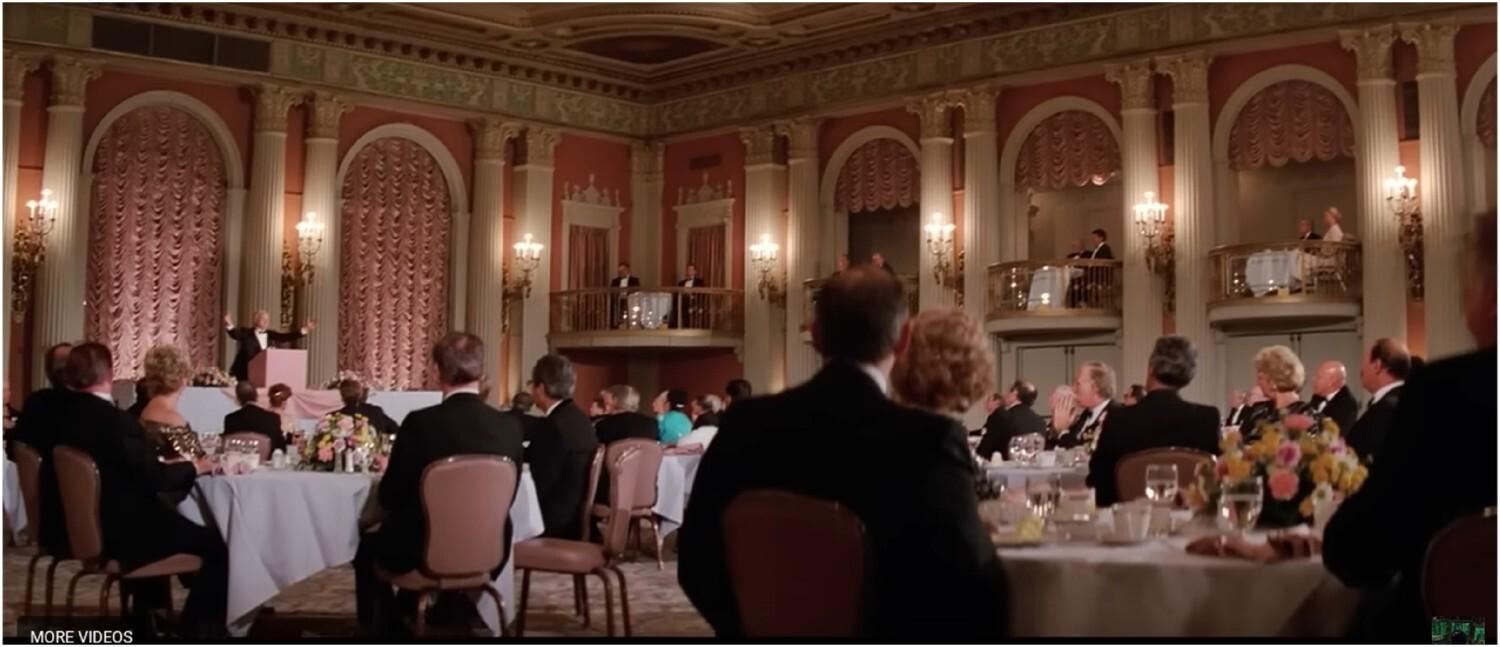
Figure 1. Screenshot from They Live, the image displays the cabal of the ‘human power elite’ at a shareholder dinner. Source: Youtube.
During research on a new prospective rare earth element mine in Wyoming, a US National Laboratory colleague and I found out about the annual WEA’s Summit (Figure 2), which describes itself as ‘a gathering place for energy innovators, researchers, developers, and industry stakeholders to connect and collaborate. By bringing together experts from diverse sectors, the summit fostered meaningful discussions and strengthened Wyoming’s energy industry as a whole’. In summary, as WEA Executive Director, Robert Creager, said, ‘[T]his summit has become a premiere event to really showcase the strength that Wyoming has in all areas of energy’.[3] The state of Wyoming, for readers unfamiliar, is a middle-western US state well-known for energy extraction and home to the Shoshone, Arapaho, Cheyenne, Ute, Lakota and Crow nations. The film Wind River (2017), depicting the Wyoming Wind River reservation in typical colonial style,[4] shows harsh reservation conditions, worker (‘man’) camps that foreground the areas entanglements with oil extractivism. Wyoming is famous for coal, oil and uranium extraction on native territory (e.g. the ‘Black Hills’), but also its conservative cowboy culture.
While Wyoming focused, the WEA summit included all the top and ‘start-up’ energy companies, select industry lawyers, representatives from the Wyoming Department Environmental Quality (WDEQ), a Trump appointed member of the Environmental Protection Agency (EPA) and Governor Mark Gordon (see Figures 2 and 3). It was a convergence of extractive industry, national and federal authorities and interested academic onlookers, like ourselves. The attendance cost was cheaper than an American Association of Geographers (AAG) and more expensive than the Political Ecology Network (POLLEN) conference. The Summit orchestrates a cabal in plain sight: If you have the money; understand its implications; hear about it (e.g. attuned to the correct media/industry channels); and are not denied entry by administrators, then you can attend the event. It is an extractivist cabal hidden in plain sight, amongst the routines and infrastructures of daily life, which we stumbled upon haphazardly during research.
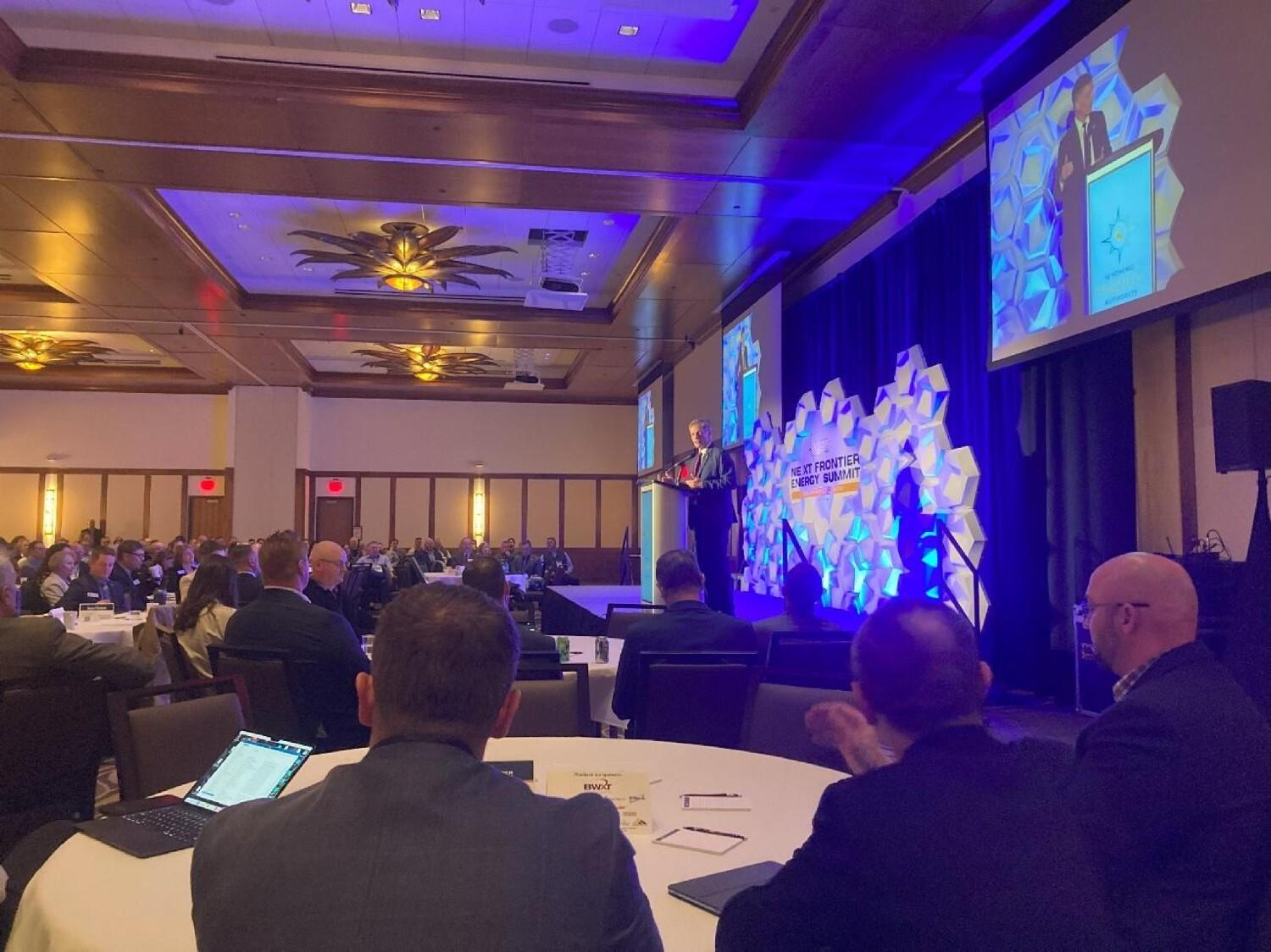
Figure 2. Wyoming Governor Mark Gordon speaks WEA Summit on extractive development in Wyoming, May, 2025. Source: Author.

Figure 3. PowerPoint slide of the panel line up on Pro-Energy Permitting. Source: WEA (2025).
My three main takeaways from this conference are these: (1) Nuclear power is making a comeback (in various forms); (2) artificial intelligence (AI) and data centres are welcomed by authorities in Wyoming; and (3) if there was any doubt over the concept of total extractivism, then this open extractivist gathering should dispel it. WEA director, Robert Creager, was clear in his introductory remarks: ‘We see the champion of all energy in the state of Wyoming, and we know we’re going to need all the energy that this state can produce to make sure to tackle our challenges’ (emphasis added). The totalizing attempt emerges with the ‘all’, the WEA, and state of Wyoming, want to capture and develop all the energy possible. ‘It’s the diversity in innovation that this state has known for many decades’, explains Creager, ‘And here under one roof, we’ll have leaders from coal, oil and gas, wind, nuclear, carbon management and more. This event really embodies our ethos of the Energy Authority, which is more is more’ (emphasis added). This ‘all’, and ‘more is more’ – echoing Jean Baptiste Fressoz’s (2024) recent book title: More is More is More – includes, as Creager continues, ‘laying the groundwork in advanced nuclear development, investing in hydrogen, rare earth elements and technologies’. The intersecting extractive industries emboldens the ‘grey’ and the desire for ‘all’ enunciates the desire for total extractivism(s).
Above, Creager also references ‘our challenges’. These challenges oddly are not all that different from the 1970s goal of advancing ‘national energy self-sufficiency’ in the ‘coal-rich (but dry) western areas’, such as the Black Hills and ‘four Corners’ states that were demarcated as ‘“national sacrifice area[s]” for purposes of pursuing unrestricted energy resource development’ (Churchill & Vander Wall, 2002, p. 133). Desiring Wyoming for being ‘tested for next generation energy technologies, serve as a backbone for the US electricity and electricity exports’, Creager contends, will ‘play a pivotal role in energy independence’. Priding Wyoming for ‘finding an equilibrium and not allowing things to slide way to the right or way to the left, but always finding a way forward’, Wyoming Governor Mark Gordon echoes Creager’s concern for challenges and opportunity in his opening speech (see Figure 2).
Celebrating recent negotiations with Taiwan and Japan to export Wyoming coal, Gordon attributes this to opportunity arising from the ‘tariffs that are being brought by the president’ with Japan and Taiwan balancing ‘that trade deficit by buying more of our energy’. International market demand, we learn, fuels this desire to extract all of Wyoming landscapes, of which ‘clean coal’ is positioned as an added value during the speech. While telling the audience that he was standing next to Trump on his April 8 2025 signing of executive orders and how he spoke of ‘beautiful clean coal’, Gordon exclaims:
There is no place that has more beautiful, more clean, more plentiful coal than Wyoming. And so to think about the ability to get our coal off the west coast is something that Taiwan and Japan feel can make a difference in their efforts to become net-zero.
Net-zero and ‘greening’, even in a conservative state like Wyoming, is recognized as having a beneficial added value to the state’s coal exports. This animates concerns that ‘green capitalism’, or (neoliberal) environmental policies, serves to advance extractivism, delay important socioecological and climate efforts and, in some instances, proliferate conflict (Brock, 2023; Dunlap, 2024; Dunlap et al., 2024; Fressoz, 2024; Müller, 2024). So-called ‘clean coal’, the audience is told, is good for international trade, business and coal mining companies.
While ‘all’, ‘more’ and export-oriented development are central in Gordon’s speech, innovation, efficiency and the future is where the emphasis is placed. ‘We have opportunities to innovate, to make mistakes, to correct some of those mistakes’, says Gordon, ‘and to really drive to a future that is efficient; that is environmentally sound; and that has a mix in the energy portfolio, everything from renewables in the appropriate place to fossil – done it right – to nuclear – done it right’. How to extract everything correctly, safely and efficiently is the unquestioned prerogative of the summit, but there is also a shift, and emphasis in Gordon’s speech, from an all of the above energy strategy to the ‘best of all of the above [strategy], because we know in every situation there is an appropriate technology and an appropriate way to be able to drive the energy that we need’ to develop maximum economic growth (emphasis added). Gordon turns ideas of appropriate technology, from Ivan Illich (1973) to Ernst Schumacher (1973), on its head, which extends to him celebrating data centres. Wyoming, Gordon contends, is ripe to host ‘data centers, AI, etcetera, etcetera’ because ‘friends, you all know this: We are higher, dryer and cooler than so many other places in the country that there is a tremendous opportunity for [high-technology] investment there too’. This interest in data centres signals the relevance of ‘digital extractivism’ advanced by Calvão and Archer (2021), Bresnihan and Brodie (2021, 2025) and Chagnon et al. (2021, 2022), which also transgresses the traditional boundaries of (economic) extractivism.[5]
While this was just the first hour of the WEA Next Frontier Energy Summit, numerous industries from wind to coal were present side-by-side. This included talks from lawyers and regulators positively discussing the Strategic Lawsuit Against Public Participation (SLAPP; see Figure 3), which discussed Energy Transfer – famous for the North Dakota Access Pipeline (NDPL) project – filling a $660,000,000 lawsuit against Greenpeace (2025) by claiming they were the organization behind the Indigenous water struggle.[6] While a ridiculous, and arguably racist, claim by Energy Transfer (implying Indigenous people could not organize this protest themselves), the WEA openly hosted reflections on lawfare against environmentalists and Indigenous people with the unspoken objective of advancing total extractivism. The crowd would circulate between enthusiastic and polite applause for speakers, while the question and answer (Q&A) was managed by summit facilitators.
Finally, in addition to permitting, regulation and lawfare, oil enhancement and the uranium development industries were particularly active at the Summit. Nuclear energy development retained a strong presence in presentations. The energy summit was an extractivist meet-and-greet, exchange and agenda setter hosted at the University of Wyoming to advance extractive capitalist interests. The University’s ethical double standards prevail under the weight of extractivist and modern infrastructural hegemony, further supporting total extractivism and, consequently, marginalizing any serious conversation about real socioecological sustainability, renewability and establishing circular economies. The reality of total extractivism, organized by the state and capital, demands the readjustment of definitions, theories and ways to challenge extraction and extractivism – as they differ and intersect.
Conclusion
The Wyoming Energy Authority (WEA) Next Frontier Energy Summit (2025) demonstrates the enduring capitalist reality of total extractivism and, by extension, the limited classical framings of extractivism and ideas of fossil capitalism.[7] This total extractivist reality remains implicit, unspoken and frequently bypassed in extractivism literature by emphasizing nationalist development, macro-economics and interlaced extractive and manufacturing supply-chains (Artiga-Purcell, 2024; Dunlap et al., 2024). Gudynas (2021) and Ajl (2023) are correct on the importance of being precise and developing extractivist – and by extension postdevelopment – theory, but we need to recognize the roots of extractivism in statism, sustained and operated by the logics of patriarchy, capitalism and racism. While grey extractivism continues to emphasize industrial interconnections and the complications associated with global extractivism, the term total extractivism exemplifies an institutionalized statist/capitalist effort to organize the extraction and processing of ‘everything’ and ‘everyone’, which the WEA Summit outlines and seeks to advance.
Ajl (2023) is right to challenge extractivist and postdevelopment theory, but this should not be used to perform apologetics for authoritarian states and dictatorships. Imperialists have and continue to bomb and terrorize people into the state system, frequently producing the understandable desire within people to affirm or build state structures and (national) military self-defense. States, (civil–military) extractivism and imperialism are essential drivers of total extractivism and planetary catastrophe. Through the early statist and colonial project (Dunlap, 2025; Gelderloos, 2017), states remain political, economic and logistical containers to facilitate extractivism within the (world-systems) global hierarchy of states. Colonial politics is counterinsurgency, which seeks to divide, conquer and pacify populations into statist governance and political economy. Even if eco-socialist commonalities exist (e.g. anti-militarism/imperialism, food autonomy, etc.), states remain a structure of political and ecological conquest advancing total extractivism by various means. States, in all their variety (Ince & Barerra de la Torre, 2024), tend towards organizing ‘the most intensive exploitation of the people’s labor for the benefit of capital concentrated in a very small number of hands’ of people by relying on educational indoctrination (Buch-Hansen et al., 2025; Gills & Morgan, 2021; Illich, 1970/2002), applying ‘military force’, infrastructural, political and psychological controls (Bakunin, 1873/1990, p. 12; Gelderloos, 2017). Whether done in the name of anti-imperialism, ‘the people’, ‘democracy’ or ‘the nation’, states facilitate and negotiate permanent low, high and genocidal warfare that necessitates resource control and extractivism.
Total extractivism, however, illuminates the opposite direction of development: Total liberation. This article suggests that total liberation offers a trajectory, or antidote, against total extractivism. Total liberation, Simon Springer (2021, p. 236) explains, is ‘an intersectional ethos that seeks to contest all forms of inequality and domination’. Total liberation, according to Pellow (2014, p. 18), has four pillars: ‘(1) an ethic of justice and anti-oppression inclusive of humans, nonhuman animals, and ecosystems; (2) anarchism; (3) anti-capitalism; and (4) an embrace of direct-action tactics’ (see also Springer et al. 2021). Postdevelopment, Dunlap and Tornel (2025, p. 239) contend, ‘strives for total liberation, resisting domination across humans, nonhumans, genders, and peoples’ (see also Dunlap, 2024, 2025; Ziai, 2025). The lens of total extractivism, and its antidote (total liberation), invites a political tension and offers a direction to remedy statist extraction and move beyond extractivism by radically composting and transforming our social and political structures, but, most importantly, our understanding and relationship with our habitats.
Total liberation, however, does not deny the possibility of convivial (modern) infrastructural development (Tornel & Dunlap, 2025), but there needs to be a radical re-thinking, re-developing and radical challenge to statism, imperialism and capitalism and the patriarchy, racism and other discriminations that stabilize them. Total liberation offers a pathway and trajectory forward, even if difficult and seemingly impossible. As Ward Churchill (2003, p. 272) reminded us: ‘you must never allow your oppressor to define what’s “realistic” for you’. Imaginations, capabilities and ideas should not be constrained by ‘practicalities’ or (capitalist) ‘realism’ even if their confrontation is inevitable. We live in realities once considered impossible and are now increasingly colonized by technologies that were once only distant dreams of fascists and totalitarians. The modernist dreams of progressives and socialists – from Ildefons Cerdà, Jeremy Bentham, Lenin and Le Corbusier to name a few – have always suffered colonial afflictions, statist visions and waged war against their habitats. Total liberation, while impossible in the present, remains a trajectory to develop, meanwhile refusing the demoralization of statists, modernist planners and capitalist – friendly or imperial. This article is a call to further theoretically and practically develop total liberation against total extractivism.
Organizing an alternative to extractive development remains the postdevelopment task. This means undermining both imperial war and internal colonization; developing local and regional systems of health, food and security that federate horizontally to prevent statist accumulation of power (Bakunin, 1873/1990; Gelderloos, 2022, 2024). Total liberation means creating space, by chipping away at and re-appropriating institutions (e.g. radical municipalism, see Andreucci et al., 2025; Post et al., 2025) and creating space by every (legal) means (above, below, left, right and in-between) to advance relations and space towards total liberation (Dunlap, 2024). The task to develop total liberation, or ‘a “decolonial” neither left-nor-right’ praxis (Ajl, 2023, p. 13), that refuses and, or at the least, sees beyond statisim – Left or Right – is urgent. Greta Thunberg’s (2017–2019) ‘climate emergency’ – and recognizing the problem of climate catastrophe – is not all that different than Max Ajl’s (2025) eco-socialism: Both underestimates the solutions proposed – whether promoting green capitalism solutionism or (eco)authoritarian statism. Total liberation seeks to advance an alternative to development, rejecting total extractivism and seeking to (re)negotiate technology, health and security, which is a reminder to struggle through the impossibilities and practicalities of the techno-capitalist/(eco)modernist present.
References
Ajl, M. (2023). Theories of political ecology: Monopoly capital against people and the planet. Agrarian South: Journal of Political Economy, 12(1), 12–50. https://doi.org/10.1177/22779760221145232
Ajl, M. (2025). A new economics with justice at it’s core. In: Rethinking Economics Norge. Accessed October 9, 2025, from https://www.youtube.com/watch?v=9YMzYzFKpSo
Andreucci, D., López, G. G., Franquesa, J., & Nieves, L. G. (2025). Energy sovereignty from below: Visions and practices of socioecological transformation in Puerto Rico and Catalonia. Human Geography, 18(2), 162–177. https://doi.org/10.1177/19427786251317182
Artiga-Purcell, J. A. (2024). Relational resources: Moving from plural to entangled extractivisms. Political Geography, 110, 103076. https://doi.org/10.1016/j.polgeo.2024.103076
Bakunin, M. A. (1990). Statism and anarchy. Cambridge University Press. (Original work published 1873).
Benally, K. (2023). No spiritual surrender: Indigenous anarchy in defense of the sacred is a searing anti-colonial analysis rooted in frontline experience. Detritus Books.
Bloom, S., & Trudell, J. (2021). High Times Greats: John Trudell. High Times. https://hightimes.com/high-times-greats/john-trudell/. (Original work published 1992).
Bresnihan, P., & Brodie, P. (2021). New extractive frontiers in Ireland and the moebius strip of wind/data. Environment and Planning E, 4(4), 1645–1664.
Bresnihan, P., & Brodie, P. (2025). From the bog to the cloud: Dependency and eco-modernity in Ireland. Bristol University Press.
Brock, A. (2023). Securing accumulation by restoration – Exploring spectacular corporate conservation, coal mining and biodiversity compensation in the German Rhineland. Environment and Planning E, 6(4), 2134–2165.
Buch-Hansen, H., Nesterova, I., & Nielsen, P. (2025). Envisioning an academia for degrowth transformations. Globalizations, 22(6), 1050–1067. https://doi.org/10.1080/14747731.2025.2480527
Calvão, F., & Archer, M. (2021). Digital extraction: Blockchain traceability in mineral supply chains. Political Geography, 87, 102381. https://doi.org/10.1016/j.polgeo.2021.102381
Carpender, J. (1988). They Live. https://www.youtube.com/watch?v=-mn0iday2tk
Chagnon, C. W., Durante, F., Gills, B. K., Hagolani-Albov, S. E., Hokkanen, S., Kangasluoma, S. M. J., Konttinen, H., Kröger, M., LaFleur, W., Ollinaho, O., & Vuola, M. P. S. (2022). From extractivism to global extractivism: the evolution of an organizing concept. The Journal of Peasant Studies, 49(4), 760–792. https://doi.org/10.1080/03066150.2022.2069015
Chagnon, C. W., Hagolani-Albov, S. E., & Hokkanen, S. (2021). Extractivism at your fingertips. In J. Shapiro & J.-A. McNeish (Eds.), Our extractive age (pp. 176–188). Routledge.
Churchill, W. (2003). Acts of rebellion: The Ward Churchill reader. Routledge.
Churchill, W., & Vander Wall, J. (2002). Agents of repression: The FBI’s Secret Wars against the Black Panther Party and the American Indian Movement. South End Press.
Dunlap, A. (2021). Book Review: The political economy of agrarian extractivism: Lessons from Bolivia by Ben McKay. Journal of Agrarian Change, 22(1), 214–219. https://doi.org/10.1111/joac.12443
Dunlap, A. (2024). This system is killing us: Land grabbing, the green economy and ecological conflict. Pluto Books. Dunlap, A. (2025).
The enduring problem of statism: Social war, total liberation and postdevelopment in the decolonization industry. Development and Change, 56(6), 1228–1257. https://doi.org/10.1111/dech.70032
Dunlap, A. (2026). Do solar panels get recycled? Exploring the political ecology and toxic geographies of solar panel disposal. Human Geography, 1–24. https:/doi.org/10.1177/19427786261419021
Dunlap, A., & Jakobsen, J. (2020). The violent technologies of extraction: Political ecology, critical agrarian studies and the capitalist worldeater. Palgrave.
Dunlap, A., & Tornel, C. (2025). Was postdevelopment too much? Autonomous struggle, academic coloniality & the radical roots of the pluriverse. Globalizations, 22(2), 221–244. https://doi.org/10.1080/14747731.2024.2349317
Dunlap, A., Verweijen, J., & Tornel, C. (2024). The political ecologies of ‘green’ extractivism(s): An introduction. Journal of Political Ecology, 31(1), 436–463. https://doi.org/10.2458/jpe.6131
el-Ojeili, C., & Taylor, D. (2020). “The Future in the Past”: Anarcho-primitivism and the critique of civilization today. Rethinking Marxism, 32(2), 168–186. https://doi.org/10.1080/08935696.2020.1727256
EXALT. (2020). EXALT Symposium 2020: Opening Plenary: Roundtable Discussion. Online: University of Helsinki. https://www.youtube.com/watch?v=7XMMyyv_bSQ
Fisher, M. (2009). Capitalist realism: Is there no alternative? New York: Zero Books.
Fressoz, J.-B. (2024). More and more and more: An all-consuming history of energy. Allen Lane.
Gelderloos, P. (2017). Worshiping power: An anarchist view of early state formation. AK Press.
Gelderloos, P. (2022). The solutions are already here: Tactics for ecological revolution from below.
Pluto. Gelderloos, P. (2024). Organization, continuity, community. Detritus Books.
Gills, B., & Morgan, J. (2021). Teaching climate complacency: mainstream economics textbooks and the need for transformation in economics education. Globalizations, 18(7), 1189–1205.
Granovsky-Larsen, S. (2025). Visualizing Canada in Central America: Radical cartography and transnational connections in the green extractivist transition. Anuario Centro de Investigación y Estudios Políticos, 16(16), 1–24. https://doi.org/10.15517/2ed41c71
Greenpeace. (2025). Energy Transfer’s $660 Million Lawsuit – Greenpeace. In: Greenpeace. Accessed September 21, 2025, from https://www.greenpeace.org/usa/energy-transfer-lawsuit/
Gudynas, E. (2009). Diez tesis urgentes sobre el nuevo extractivismo. In J. Schuldt, A. Acosta, & A. Barandiarán, et al. (Eds.), Extractivismo, Política y Sociedad (pp. 1–12). Quito: Centro Andino de Acción Popular (CAAP) and Centro Latinoamericano de Ecología Social (CLAES).
Gudynas, E. (2019). Value, growth, development: South American lessons for a new ecopolitics. Capitalism Nature Socialism, 30(2), 234–243. https://doi.org/10.1080/10455752.2017.1372502
Gudynas, E. (2021). Extractivism: Politics economy and ecology. Fernwood Publishing.
Hansen, B. R. (2021). The kaleidoscope of catastrophe – On the clarities and blind spots of Andreas Malm. Online: New Left Review. Accessed June 20, 2021, from https://mronline.org/2021/09/28/the-kaleidoscope-of-catastrophe-on-the-clarities-and-blind-spots-of-andreas-malm/
Illich, I. (2002). Deschooling society. Calder & Boyars Ltd. (Original work published 1970).
Illich, I. (1973). Tools for conviviality. Calder and Boyars.
Ince, A., & de la Torre, G. B. (2024). Society despite the state: Reimagining geographies of order. Pluto Books.
Mckay, I. (2024). Anarchism, Marxism and the lessons of the commune. Active Distribution.
McKay, I. (2011). Property is theft!: A Pierre-Joseph Proudhon reader. AK Press.
Müller, F. (2024). Energy colonialism. Journal of Political Ecology Grass Roots, 31(1–16), 1–16–1–18.
Nelson, R. (1963). Eight o’clock in the morning. The Magazine of Fantasy and Science Fiction, 74–78.
O’Connor, J. (1998). Natural causes: Essays in ecological marxism. Guilford Press.
Pellow, D. N. (2014). Total liberation: The power and promise of animal rights and the radical earth movement. University of Minnesota Press.
Post, E., Rosas Pérez, M., Sánchez Martínez, B., Mora Báez, M. E., González García, E., Crisóstomo Salgado, L. M., & Hernández Pérez, L. (2025). Powering the pluriverse: Possibilities and limits to decolonial energy transitions in the Sierra Norte de Puebla, Mexico. Human Geography, 18(2), 178–197. https://doi.org/10. 1177/19427786251317181
Schumacher, E. F. (1973). Small is beautiful. Blond & Briggs.
Soto-Hernández, D. (2025). Caring about energy transformations: Lessons from the Atacama Desert. Human Geography, 18(2), 146–161. https://doi.org/10.1177/19427786251325197
Springer, S. (2021). Total Liberation Ecology: Integral Anarchism, Anthroparchy, and the Violence of Indifference. In S. Springer, M. Locret & J. Mateer (Eds.), Undoing human supremacy: Anarchist political ecology in the face of anthroparchy (Vol. 1, pp. 235–254). Rowman and Littlefield.
Springer, S, Mateer, J, & Locret-Collet, M. (2021). Undoing human supremacy: Anarchist political ecology in the face of anthroparchy. Rowman and Littlefield.
Tornel, C., & Dunlap, A. (2025). Towards a pluriverse of transitions: An editorial introduction to anti-colonial and insurrectional energy transformations. Human Geography, 18(2), 129–145. https://doi.org/10.1177/ 19427786251341674
Tornel, C. (2025). Eurocentrism, development, and the challenge of decolonization: Notes on the 2025 Degrowth Conference. The Degrowth Journal, 3, 1–17. http://doi.org/10.36399/Degrowth.003.01.10
WEA. (2025). Energy Summit – Wyoming Energy Authority. In Wyoming Energy Authority. Accessed September 21, 2025, from https://wyoenergy.org/energy-summit/
Wiegink, N., & Dunlap, A. (Forthcoming). Introducing grey extractivism: Global connections of ‘green extra-ctivism’ at the intersections of mining and energy. Globalizations.
Ziai, A. (2025). Theorizing postdevelopment. The European Journal of Development Research, 37(3), 500–523. https://doi.org/10.1057/s41287-024-00682-5
[1] Marx drew on anarchists without giving credit alongside Marxists spreading lies (see McKay, 2011, 2024).
[2] They Live (1988, 1: 18:20), available: https://www.youtube.com/watch?v=-mn0iday2tk.
[3] The event recordings were made available publicly here: https://wyoenergy.org/energy-summit/.
[4] This style is reviewed by Ward Churchill (2003, pp. 185–218) ‘Fantasies of the Master Race: The Cinematic Colonization of American Indians’.
[5] See EXALT (2020), Chagnon et al. (2022), and Dunlap et al. (2024).
[6] Another resource is the Drilled podcast series, SLAPP’d hosted by Alleen Brown: https://drilled.media/podcasts/drilled/12/s12-ep1.
[7] See Hansen (2021), Fressoz (2024), and Dunlap (2026) to delve further into the flaws of Fossil Capitalism. </biblio>